25/12/2025
The Economic Cost of the "Quake" in utero
When crises escalate or a country is shaken by a major disaster, we are advised to stay away from bad news to protect our mental health. But in the age of social media, this is almost impossible. No matter how hard we try to avoid it, a constant stream of information and interaction rains down on us from our phones and screens. Moreover, it's often not just information; content based on emotional manipulation is also everywhere.
Following the Oxford Dictionary's selection of "post-truth" as the word of the year in 2016, the word that will mark 2025 makes this atmosphere even clearer: rage bait. This expression, whose use tripled in the year, refers to online content that elicits anger by being offensive, posted in order to increase online traffic. Already demoralizing bad news becomes more visible thanks to these "rage baits," reinforcing negative emotions.
Exposure to Stress Knows No Time or Place
In short, despite all our filtering efforts, it is almost impossible to avoid exposure to both human-caused and environmental events in today's world. Moreover, this situation does not only affect the mood and behavior of adults; its effects can extend to the baby in utero. Advice such as "The baby can hear you in utero, play calming sounds for the baby" is not without reason; research shows that the fetus registers environmental and emotional signals.
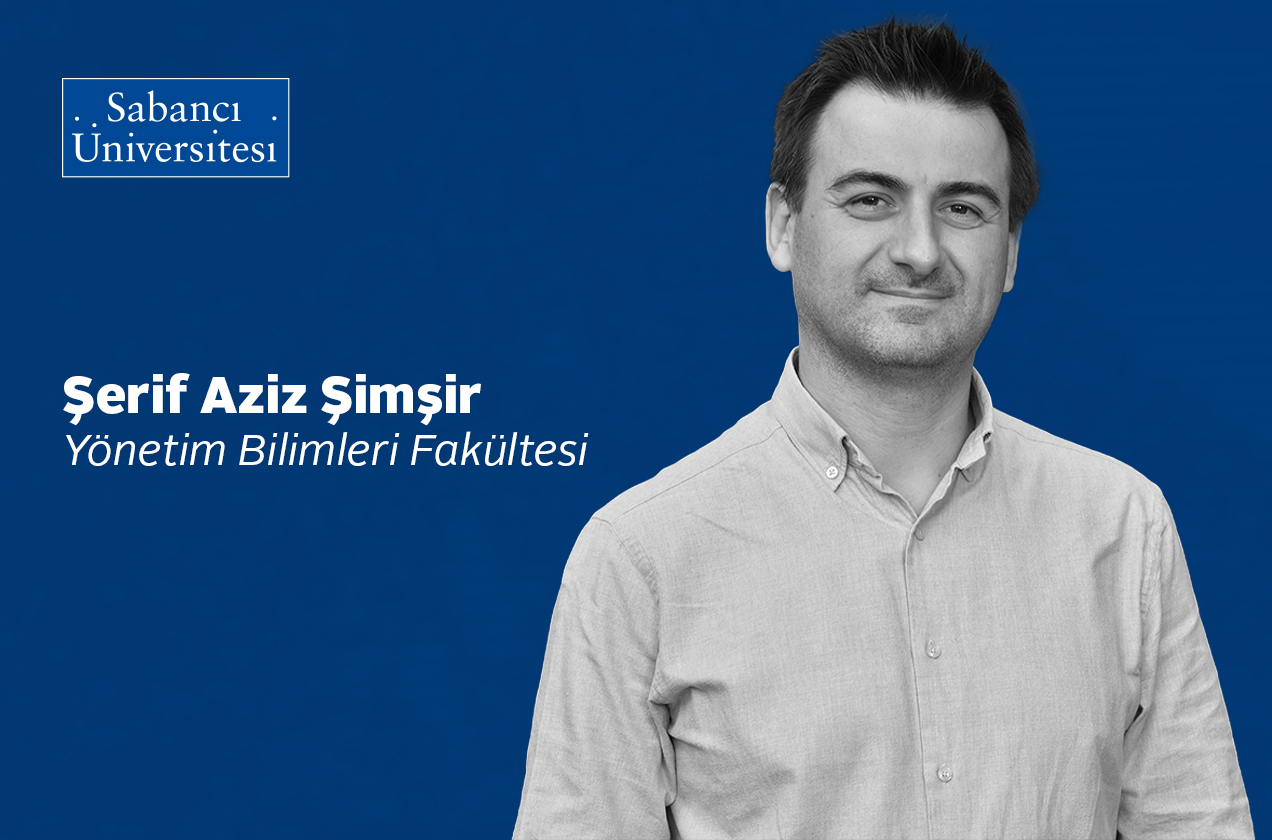
But what if we said that the negative environmental events we are exposed to through our mothers before birth affect our investment decisions and financial behaviors later on? The research entitled "Heterogeneity in Prenatal Adversity and Portfolio Decisions During Adulthood," prepared by Şerif Aziz Şimşir, Member of Sabancı Business School, together with Oğuz Ersan (Kadir Has University), Vidhi Chhaochharia (University of Miami), and Alok Kumar (University of Miami), focuses precisely on this striking question. The negative environmental factor examined in the study is earthquakes, the unfortunate reality of Türkiye.
The Damage Left by the Environment Is Deeper Than We Think
The “Fetal Origins Hypothesis” suggests that adverse environmental conditions experienced during pregnancy can permanently affect fetal development, particularly the physiological structure of the brain. Major stressors like earthquakes lead to increased cortisol levels in pregnant women, which can leave lasting marks on fetal development. Dedicated to those who lost their lives in the 2023 Kahramanmaraş earthquakes, this study shows that the effects of prenatal stress can extend to financial behavior in adulthood.
The research is based on a very comprehensive dataset:
- Seismic data on ten major earthquakes that occurred in Türkiye between 1939 and 1983,
- Investor transaction data obtained from the Central Registry Institution,
- Comparisons of more than 5,000 investors who were in utero at times close to the earthquake date and places close to the epicenter versus control groups.
They Leave the Womb, But Cannot Leave Their “Comfort Zone”
The results are clear: Babies who experienced earthquake stress in utero are less active in stock market transactions as adults, have fewer investment accounts compared to those born before the earthquake, prefer less diversification of their investment portfolios, and have much lower portfolio returns compared to their diversification decisions.
Some of these behaviors can be attributed to a tendency to avoid risk. Others are attributed to the fact that cognitive development did not occur at an optimal level due to prenatal stress—that is, to limited financial knowledge and decision-making capacity.
Again, Women Are More Negatively Affected
Female babies, and especially fetuses exposed to earthquakes in the last three months of pregnancy, exhibit more passive financial behaviors in adulthood.
The extent of the results also varies according to the level of welfare. Babies who experienced the earthquake in the womb in impoverished regions are not as negatively affected in their investment behaviors as their peers in affluent regions. Since fetuses of women who experienced more difficult pregnancies in impoverished regions are more vulnerable to the effects of the earthquake, only the most resilient survive. The more "resilient" group, who managed to survive challenging conditions, are seen to exhibit more active financial behaviors in adulthood.
The Cost No One Considers
Given that prenatal adversities affect financial decisions in adulthood, and therefore the economy, the findings of this research are not only scientifically significant but also important in the context of social policy making. Developing social policies aimed at improving the health and living conditions of expectant mothers will benefit both society and the economy, just as much as social policies related to the number of children or birth methods.
Key Findings
• Individuals who experience earthquakes and/or their effects in utero show negative changes in their investment behavior in adulthood.
• Female babies and those exposed to earthquakes in the last three months of pregnancy are particularly affected in their financial decisions.
• Interestingly, investment decisions do not worsen in those exposed to earthquakes in impoverished regions. This finding may be due to the "survival of the fittest" effect, according to which only the most resilient fetuses survive.
• Prenatal adversity affects not only individual financial behavior but also the future of the national economy. A healthy pregnancy for mothers is crucial for the well-being of both children and society.
For the full article:
Ersan, Oguz and Simsir, Serif Aziz and Chhaochharia, Vidhi and Kumar, Alok, Heterogeneity in Prenatal Adversity and Portfolio Decisions During Adulthood (April 1, 2024). Available at SSRN: https://ssrn.com/abstract=4430920 or http://dx.doi.org/10.2139/ssrn.4430920
Link to professors' biographies and other research:
Şerif Aziz Şimşir:
https://sbs.sabanciuniv.edu/tr/s-aziz-simsir
https://scholar.google.com.tr/citations?hl=en&user=SnyFbS4AAAAJ&view_op=list_works&sortby=pubdate
Prepared by: Gökçe Çalışkan